Google proof your image attributions

Often, you are in a great need for some pictures to freshen up your webpage and would like to include one of these images. If you want to do this, there are quite a lot of steps necessary:
  • Make sure you understood the license correctly
  • Get the correct HTML code for the IMG tag
  • Link the image back to the Flickr photo page
  • Give the author of the image proper credits (Attribution)
  • Link to the Flickr profile of the author
  • Link to the license the image is licensed under

Flickr currently hosts more than 75 million images that are licensed under a Creative Commons license.  Depending on the license, you may use the images on your private or commercial webpage, or make changes to it.

ImageCodr solution

With ImageCodr.org, there is no need to do all this manually!!

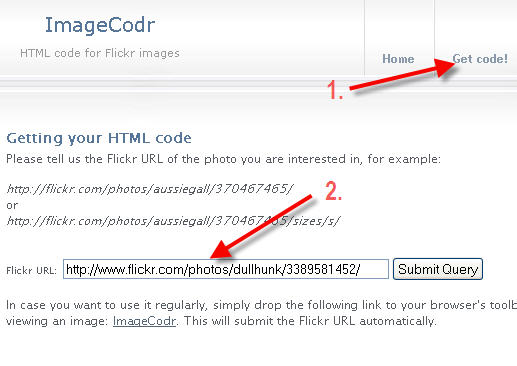
You simply grab the URL of the picture page that you are interested in.

Drop it into ImageCodr.

Then ImageCodr.org will generate the ready-to-use HTML code for you to drop into your online platform of choice.

It will also display a brief and easy license summary, so you don’t get in legal trouble because you missed something.

I know that students (and teachers) just like to copy and paste images from anywhere into anything. But we really can’t afford to miss the opportunity to teach our kids real digital citizenship skills even if it’s just about how to use images.

From small acorns, big trees grow! What seeds are you planning on help grow today?

Kids of Dreams – 2010 marks 21 years!

This slideshow requires JavaScript.

It’s not long since our wonderful Friday evening launch and celebration of the 21st edition of our annual Kids of Dreams publication which celebrates literary and artistic talent. Student’s  prose, poetry and artwork from Years 7-12 are included in the publication.

It was an amazing night! Why?  Well it was ‘special’ for a number of reasons.  I was the main editor of the production this year, along with my wonderful Teacher Librarian colleague Kirsten Reim (who wrote a wonderful editorial for me), supported by my ever efficient library team. We came to the job a little late this year, so it was a complete scramble to the end, making sure that everything was as right as possible.  So much writing, so much art, so many decisions about layout and presentation. It was an amazing and rewarding experience to be able to work on a publication that showcases the work of our students who have the courage to speak up in artistic forms.

Author Brian Caswell provided the judging of the student’s literary works. Brian was Writer in Residence at the College earlier in the year.  Brian’s comments for each item he chose for an award are worth reading – so much so, that this year I included the judge’s comments within the publication itself  as a record of achievement for the students.

Kids of Dreams was  launched on Friday 19th November with the help of my talented Twitter friend Mark Pesce (inventor, writer, theorist, panelist on #newinventors, obsessed with language, communication, social networks).  I was able to tell the audience that Mark was the first VIP guest to come to the College as a result of an invitation arranged through Twitter!

Mark provided an inspirational keynote/official launch presentation – and focussed on the power of creativity to drive our learning and thinking. Creativity and inspiration is inside us all, and around us every day. How we harness these talents and opportunities is up to us, and how we share them with others is the key to change and development of value in all we do.

Hey! I never thought I would be MC at an event with Mark!!  Thanks very much Mark for making out 21st celebration a stunning success.

I swear I wasn’t smoking anything!

“I swear I wasn’t smoking anything. But I might as well have been”… is a tantalising statement in an article from Harvard Business Review earlier this year on How (and Why) to Stop Multitasking. To quote:

A study showed that people distracted by incoming email and phone calls saw a 10-point fall in their IQs. What’s the impact of a 10-point drop? The same as losing a night of sleep. More than twice the effect of smoking marijuana. Doing several things at once is a trick we play on ourselves, thinking we’re getting more done. In reality, our productivity goes down by as much as 40%. We don’t actually multitask. We switch-task, rapidly shifting from one thing to another, interrupting ourselves unproductively, and losing time in the process. You might think you’re different, that you’ve done it so much you’ve become good at it. Practice makes perfect and all that. But you’d be wrong. Research shows that heavy multitaskers are less competent at doing several things at once than light multitaskers. In other words, in contrast to almost everything else in your life, the more you multitask, the worse you are at it. Practice, in this case, works against you.

The value of this article hit home for me yesterday when I read 7 Powerful Reasons Why You Should Write Things Down. I’ve not read Henrik Edberg’s book – could be good or bad for all I know.

But I do like some of the sentiments he expressed, particularly when I think about multi-tasking, and the use of technology.  I do believe that educators have to stop and think a little about  how important it is to promote reflective writing in our students. There is very good value in stopping and thinking AND there is still very good value in stopping and thinking with a pen and paper.

Well, of course, I’m not pushing against technology so much as pushing for technology melded with the a form of technology that is less  conducive to multitasking – i.e. writing on paper. It’s about capturing ideas. It can be about the tactile experience of writing those ideas down. Of focussing your full attention on the ideas as you write. Of letting those ideas rest. Of crafting and making by hand something that is an expression of our own thinking.

I liked some of these concepts shared by Henrik too:

Unloading your mental RAM. When you don’t occupy your mind with having to remember every little thing  you become less stressed and it becomes easier to think clearly. This is, in my opinion, one of the most important reasons to write things down.

Clearer thinking. If you want to solve a problem it can be helpful to write down your thoughts, facts and feelings about it. Then you don’t have to use your for mind for remembering, you can instead use it to think more clearly. Having it all written down gives you an overview and makes it easier to find new connections that can help you solve the problem.

Well, I have to admit, I do like notebooks, and nice pens.

Perhaps I’m just reflecting my age – or reflecting the values of an age that we shouldn’t lose just because we love technology!

My kids always wrote journals for their holidays and some of these are the nicest things we have to remember who they were when they were young. While I love to see and hear about the amazing feats of students who excel in virtual worlds, gaming and the like – I personally still stake a lot of value in the slow, deep, and reflective practice of writing.

The trick is to allow our students to have the time to acquire the habit and the skill of writing for pleasure, relaxation, reflection and learning. Sadly, I feel that schooling has slammed the door shut on this most wonderful of capabilities.

Where good ideas come from

This video is a great discussion starter for your next staff meeting.  Creativity? Social networking? The internet?  Oh yeah!

via Scott McLeod,  Mind Dump

What matters more than your talents?

Inspiration and passion – that’s what we want to ignite in our students, isn’t it? I am not sure how often we succeed, especially when we are locked into rigid curriculum ‘must do’ topics by state syllabus directives.

But at the end of the day, talent must be nurtured and passion must be ignited and recognised for it’s true worth.

Thanks to an alert from one of my inspirational friends on Facebook – Buffy Gunter Hamilton of the inspirational The Unquiet Librarian – I was able to listen to Amazon founder, Jeff Bezoz,  address new Princeton graduates.

He makes the case that our character is reflected not in the gifts we’re endowed with at birth, but by the choices we make over the course of a lifetime. As founder and CEO of Amazon.com, Jeff Bezos defined online shopping and rewrote the rules of commerce, ushering in a new era in business. This is testament to his belief that talent and passionate choices go hand in hand!

Now I’m never going to ‘invent’ anything!  But Jeff ‘s address has inspired me to revisit my talents and look for new inspiration in my own professional goals, and to try and bring a little more inspiration into my daily teaching interactions with my students!

It’s Bloomsday!

I remember  being in Dublin on Bloomsday on June 16th  back in 2004. Amazing!

Now I admit that I wouldn’t be expecting too many of my students to dip into and enjoy James Joyce’s book Ulysses in its full glory-  but on the other hand  it’s important to find ways to allow students to dip into good literature. Igniting an interest is important!

Reading ‘Ulysses’ can be hard work.  So here’s an abbreviated form…Ulysses Seen a serialized cartoon App, which is also now available for your iPad, as well as online at http://ulyssesseen.com/

Robert Berry’s comic adaptation of the 1922 edition of James Joyce’s epic novel, ULYSSES is accompanied by a page-by-page reader’s guide, dramatis personae, and pop-up translations of non-English passages. The reader’s guide is enhanced with discussion groups and links to online information sources, photos, videos, and other assorted bric a brac allowing you to dive as deep as you like into the world of Ulysses.

This is just another good way into good literature.

A Pixel art aside!

As I wind down (or is it wind up?) in readiness for the trip to ISTE2010,  followed by an excursion to Scotland and UK,  I accidentally bumped into this video, courtesy of my favourite reader PULSE  on the iPad.  More about Pulse later…

Meanwhile, here’s an 11 minute documentary exploring the merits and impact of pixel art, animation and chiptune music.  Loved seeing this and hearing the interviews that tell the story and emergence of this artform. Enjoy!

Looking for Music?

ccMixter is a web site providing samples and remixes that are released under various Creative Commons licenses. Now the site has a new addition: dig.ccMixter, available in beta at http://dig.ccmixter.org/.

Looking for music for a video, school project, game you’re developing, podcast or just for listening on your mobile music device?

Find exactly the music you’re looking for – podsafe, liberally licensed – using dig.ccMixter Music Discovery tool.

Dig allows people who are looking for music to find it more easily.  What I listened too was fantastic quality too.

(information via ResearchBuzz)

Flat Classroom Project: Fresh start in a new world

The brilliant work by Julie Lindsay (Beijing, China) and Vicki Davis (Westwood Schools, Georgia, USA) continues in The Flat Classroom Project 2010-1 which is now is well under way for 2010.

The Flat Classroom™ Project is a global collaborative project that joins together middle and senior high school students. This project is part of the emerging tend in internationally-aware schools to embrace a holistic and constructivist educational approach to work collaboratively with others around the world.

One of the main goals of the project is to ‘flatten’ or lower the classroom walls so that instead of each class working isolated and alone, 2 or more classes are joined virtually to become one large classroom. This is done through the Internet using Web 2.0 tools such as Wikispaces and Ning.

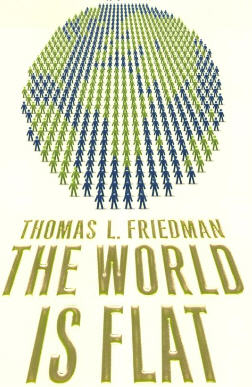
The Project uses Web 2.0 tools to make communication and interaction between students and teachers from all participating classrooms easier. The topics studied and discussed are real-world scenarios based on ‘The World is Flat‘ by Thomas Friedman.

I was honoured to be invited to present the Keynote, ‘Pandora’s Box: Fresh Start in a New World’ for FCP10-1. This time there are  over 200 students from 10 classrooms across 6 different countries.

Here are some guiding questions to get them thinking about how to respond and start a discussion or foster an existing discussion:

  1. Is global collaboration using emerging technologies a pandora’s box? Why?
  2. How can we best prepare the ’17 year old Internet/connected world’ to mature and grow into ‘adulthood’?
  3. How has the flat world impacted on you as a teenager? as a teacher?
  4. What place do immersive worlds and virtual realities have in education?

Open Source ethos

I have been spending a bit of time thinking about The World is Flat by Friedman in preparation for the first Flat Classroom Project in 2010. Amongst other things, I thought about Open Source thinking and flat world communications which I planned to share in the  Keynote kick-off.

Well, you now how it is – I just couldn’t share everything  I wanted to (lots out in the rough cuts), but the ‘finds’ are still inspirational.

You have to be inspired by the powerhouses of  Open Source software and Open Content. There is no doubt in my mind that an Open Source ethos is the best way to collaborate, create, share, and be empowered to inspire future learning.

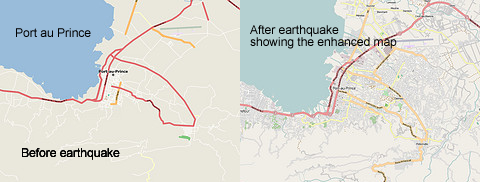
For example, during the crisis in Haiti, the Open Source community did amazing work in Haiti OpenStreetMap to assist aid and rescue workers to do their work and help the relief and reconstruction effort. It was a Flat Classroom Project in action – creating up-to-date  maps of  Port au Prince. Dozens of mappers and developers were able to lend a hand, coordinating on the OSM Haiti WikiProject.

Thanks to Paul Hamilton, I was inspired by yet another amazing example of the power of work taking place using Open Source Software to help people. The development of the  Eyewriter is inspirational. The Eyewriter uses low cost creative technology an free open source software to enable graffiti writers and artists with paralysis to draw using only their eyes.

Vodpod videos no longer available.
posted with vodpod