World turmoil changes everthing – my dad saw it all!

Turmoil is at the heart of so much change in our world – relentless change that we report on the airwaves, the media and the internet. My dad passed at 95, but for him turmoil was at the root of his character and his mechanisms for coping with life. He never understood the internet, nor did he always grasp what was happening in the media. In the end, he couldn’t grasp that we had a new Prime Minister in the country. A story that is so familiar amongst immigrant families. Yet even now, I can hardly grasp what it was that shaped his life and made him the person he was.

Born in Stari Futog back in 1913, the world was a very different place. But for my dad Joseph, and the members of his family, turmoil was already part of their history. His village was not far from Novisad (Uj Videk in Hungarian), and dad always remembered his street (Railway Street), and the surroundings of his childhood village. That I can link to this information in Wikipedia shows how our own world has changed. Years ago the search for information online was much more difficult!

World War II changed his life totally. During the conflict he fought for the right of all. He never believed in the ethnic differences, and always accepted all religions, creeds, and colours at a time when this was not normal. His mother grounded his views, right from the day when as a tiny boy he ran into his house frightened by soldiers who were all coloured in with shoe polish! Many times he told that story of his mum, and the words that clearly remained with him for his life – “all men are equal and our brothers”.

No question though, my dad was different. Though his mother and subsequently his wife were gentle Hungarians, he had that sharp Serbian edge that made him a natural leader, but also one who would not suffer fools lightly. For him, a good discussion was a good verbal fight – and a challenge to see who won!

Dad’s village was the site of religious/ethnic cleansing. Massacres of the Serbian Orthodox population were also carried in numerous parts of his home country. But the most numerous massacres occurred in Novi Sad from January 21-23 of 1942, when nearly a thousand Serbs were martyred. Some of them were even thrown into the ice-covered river while still alive. [Serbian Orthodox Martyrs]

At the end of the war, dad got word that all his family and friends were murdered and he vowed never to return to his homeland – the site of such atrocities. He set his sights on a new future. (Could I do this?) By then he had settled in with the American Army in Lanshudt, Germany, as an interpreter (dad spoke many languages fluently).

Eventually he met up with my mum’s extended family, and he made the journey out to Australia in 1950, arriving to the immigration centre at Wacol near Ipswich, Queensland, where at the age of 36 he married my mum who was just 19, and started a family of his own in a new land. Once again he suffered a rebuff. Raised as a Serbian Orthodox, he was excommunicated for marrying ouside of his church. Many years later he was approached by the church and the excommunication was removed – naturally he refused to rejoin the church since in his view the church had been so stupid!
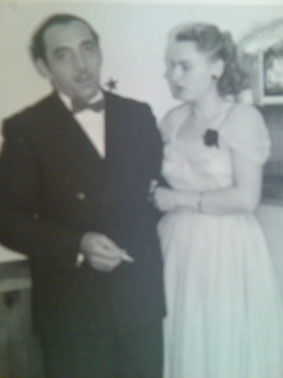
A new adventure began, and Dad got stuck into it with his usual determination. Dad made his way through the adminstration ranks of the Australian Immigration Centre organisation, and became the chap responsible for catering for various ‘camps’.

My childhood is marked by these various ‘camps’ – and I lived in these multicultural centres till the age of 12, in various parts of Australia. As a result my childhood was enriched by playing with kids from so many different backgrounds newly arrived in the country, and eating food that was not at all available in mainstream Australia. I couldn’t stand an Aussie pie (made me gag) and never ate a ‘banger’ until I went to Girl Guides. We played ‘hide and seek’ by copying – each kid counting to 100 in their own language – and before long each new kid in the playground could speak some English!

Dad was the complete handyman – and I was his apprentice. I learned to love gadgets (still do!), to drill and to hammer, and to strip down two Fiat 500 cars and help rebuild it into my first car – a complete ‘double clutch’ number that I tuned myself, and ran on 60cents a tank. I had my very own tool kit by the age of three, to carry around as dad’s shadow. Took years to convince my family that my most desired mother’s day present would be a tool kit of my very own, that no-one else was permitted to touch! He also grew wonderful vegetables, and had fabulous fruit trees that mum made stunning jam from. That was something I wasn’t so fond of, as being an only child, it was my duty (no one to pass the buck to) to water the garden each day, and in winter to chop the kindling, light the fire, and clear the grate on weekends.

In this time dad developed a real love of parties, friendship – and lawn bowls. A competition winner, he worked hard with Colonel Quinn at the centre at Bonegilla to establish a competition standard bowling green for the officers and administration staff of the Centre. Dad was a very bossy kind of man, and ruled his family with a verbal rod of iron. But he was proudly Australian – so much so, that when I started school he insisted that we converse in English at home. Hence my Hungarian is now somewhat sketchy as I only really heard it at the gathering of friends, or when I visited my mother’s family who lived a long way off from us near Newcastle (not an easy trip in those days).
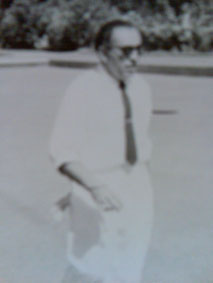
Finally, mum and dad settled in Albury, and I began a more ‘normal’ youth, attending St Joseph’s Ladies College till Year 12. Dad was a hard task master. I was expected to do well at school, and when I was unfortunate to be placed second in my class in tests, the response I always got was anger and ‘why are you not first’! I slacked off in High School, so I hid my school reports, or tore them up for many years – claiming that the nuns didn’t write reports! In the end it didn’t matter, because dad was thrilled when I scored a scholarship to attend Sydney University – at that time it was not possible for ordinary country folk to send a child off to tertiary study – so for both of us this was a dream come true.

I went off to university, and stayed in Sydney after that upon finding my hubby and soul-mate. My dad loved the kids and over his life gave us a tremendous hand particularly when we were starting out. His trips to Sydney were a tight schedule of repairs, and building of things around our house – so wonderful as we didn’t have much money around to do these things. Mum made the kids clothes, and knitted some fabulous jumpers to keep the girls warm.

Dad had a passion for classical music, which he passed on to me. He had an awesome LP collection, and loved opera and a good tenor too! He also used his fantastic sound system to copy so many LPs onto tape for my little girls, so that we had many hours of listening for car journeys, and to help settle youngsters into bed. We still use his sound system at home – after all these years it is still superb! He loved movies and the TV – and told many stories about the silent movies of his youth, and the magic of the pianist creating musical drama by simply watching the screen and improvising right along. He also loved Science Fiction and spoke often to me of Jules Verne and his predictions. Science Fiction became a passion of mine also – though not solely via dad’s stories, but by stumbling on Isaac Asimov in the Adult library at the age of 12! Thanks to his passion I was allowed to stay up late and watch Star Trek – the only show I had permission to watch when mum and dad had retired!

Eventually the family grew up and away from dad – whose grasp of English became weeker as he grew older. It was impossible to explain some things, or for him to understand complex things. Dad had a passion for soccer, so for many years that was a great joy for him to watch long after he had to give up playing bowls. He lost mum 20 years ago, another huge change and challenge – one that was almost too hard for him to endure.

And then he became a little old man, in the care of others at Borella House, where he lived till his last days. They knew nothing of his story. But there were friends who did, who continued to visit him till the end. His funeral was a small but beautiful finish to a long and turmoil-filled life. Family, friends, and kind people from earlier years in Albury were there to say goodbye.
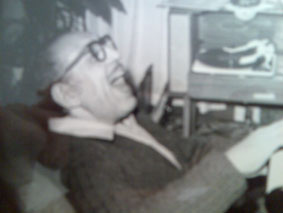
The challenge for us all is to see what we can make of our lives, and what legacy we can leave behind – particularly when we haven’t had to experience the turmoil and change that dad and others like him have had to endure and conquer.

Dad’s personal history and turmoil meant that he could never share his story with his family – we know so very little about his first 36 years. But we did know that his journey of turmoil started with the loss of his brother Michael who drowned when they were teenagers. He was his big brother’s best friend and shadow, and dad missed him all his life.

My heart goes out to all those in our land who have suffered personal turmoil or such change from war or invasion, and who are contributing in such positive ways to our Australian society.

The Bonegilla Migrant Camp (where we lived for the longest time) is now the Bonegilla Migrant Camp Block 19 Heretige Site. Block 19 was included in the National Heritage List on 7 December 2007. The Heritage office is my old home – and my bedroom is part of a heritage listed facility! I’ve driven past, but next time I’m down that way I shall be sure to call in and take a pic! Bonegilla was one of the first, and the largest and longest-lived migrant reception and training centre. Altogether over 300 000 people spent some time at Bonegilla, before the centre closed in 1971. Bonegilla marked the height of dad’s personal work achievements, so I’m glad Block 19 is still there!

This is a story of my dad Joseph (Josip Ilija) Ilic – known as Joe, until the last few years when he demanded to be called Joseph again!

I’m sharing this brief story with all my friends who have asked to hear a little of his story – a different kind of story for sure! Thanks everyone 🙂

Farewell to my dad

My dad has gone! His last illness took all his energy away. At 95 he just couldn’t recover again.

He joins mum, who left us 20 years ago.

His funeral takes place Thursday 12 June, at 2.00, at the Sacred Heart Church, 990 Mate Street, North Albury.

Thank you to all the wonderful friends online that have send wishes. My family and I have been strengthened in our loss by your condolences.

Requiem in Pace.

  • How do we support teachers? – Symposium response

    Digital Education Revolution – provide your feedback!

    In Australia we have the Australian Government Quality Teacher Program (AGQTP), which includes teacher quality and their impact on student outcomes. Considerable funding has been directed towards this. Rolling out a range of workshops in regional areas, as well as activities with professional associations. Also considering subject-specific standards and on-line professional learning resources.

    Suggestions from the floor:

    Portfolio of examplars at the national level. Podcasts as resource tools. Fund technology coaches for schools. Consideration for remote areas of Australia – and how to transfer information to regional and remote areas. Collaboration between various sectors. Use technology to assess literacy standards in national testing programs.

    Responses to questions from the sessions:

    If teachers don’t have time to do it all! Yet we are re-tooling our whole processes of education – the exploration is going to take time – and will make us more efficient and integrated in the end. Any organisation that is going through the process of transformation, will required us to commit. Our pedagogical knowledge has to change – technology can solve the pedagogical issues if we want it to. So bottom line – buy time to learn!

    The key issue remains the need to establish collaborative environments. We have more knowledge than we can share with old technologies.  Sessions like this symposium should be streamed, so that educators can talk in the ‘back channell’ promoting the conversation.

    Assessment should be a trust relationship between the educator and the student.  It’s a true social network in the making – information should be exposed and developed, and made transparent.  We need to focus on the social networking of education.

    The 21st century classroom is a state of mind.  It’s a set of relationships between someone who wants to learn and someone who wants to teach. The relationship is around the transfer of learning.  Education is dead: long live learning!

    Photo: Listening to the Stars

    What is powerful about teaching with technology?

    Gary Putland, General Manager Education.au

    Understaning the paradigm shifts: what is powerful about learning with technology?What are the challenges and opportunities? What tools can assist us and what are the characteristics of success.

    Lawrence Lessig – Creative Commons – and a visit to the Ted Talk – helps us to focus on the significant paradigm shifts – and the spirit of mashup and the tools of creativity.

    1. Understanidng the paradigm shifts begins with a few key points that are challenging our daily practice:
    • Mobile, portable, connected
    • 24/7, access incresing
    • Transformative nature (e.g. banking, travel planning)
    • Social networking phenomena – connect, capture, store, share.

    Students are producers and creators of knowledge – kids are information rich outside of school and knowledge poor in school. The locus of control is shifting to anywhere outside the formal education environment. Part of education is to ensure that we are information rich AND knowledge rich.

    “Control” is moving out to the masses. Kids want access, and ed departments want control. Let’s work with this and create something positive from this healthy tension. Give students the opportunity to learn how to learn. Risk needs to be shared. Kids can bring a whole lot more to the learning process, and the options for personalization are becoming the priority focus. Rubrics for collaborative learning need to be developed and extended. Immediacy and currency are critical ways for students to keep up-to-date. The “C” in ICT is the vital component – its about connectedness and communication.

    The Literacy continuum is so critical – their search, selection and synthesis skills need developing. [Its about knowledge and working with knowledge.] Multiple literacies are also critical and must encompass a range of media as well as promote new literacies for thinking and knowledge creation.

    The Numeracy continuum is also critical. Are their things we should stop doing, and add new things to the learning process? Gary demonstrated “Gap Minder” which collects information and you can see the interactions between the data (trends analysis, forcasting). Other programs to use include Scratch (from MIT), Google Earth Community, Alice (3D programming environment that makes it easy to create an animation for telling a story, playing an interactive game, or a video etc.

    Just how do we help students to understand themselves? That’s what should be the driving force in developing digital pedagogies. Opportunities to explore also include ‘truth, trust and authority’. What is truth? becomes Who do you trust? We have a critical responsibility to help kids understand the implications of a ‘digital footprint’. Finally, we need to help students understand intellectual property in the era of Mashup and democratization of information. Creative Commons concepts need to be explored and extrapolated into the world of our students as produces and consumers of information.

    Web 2.0 tools enable storing and sharing of content. Edna is going to launch Edna TV as an alternative collaboration and sharing space

    Emerging technologies are important to follow and integrate into our thinking. The blend between blogger, researchers, IT industry players, education organisations and more are working to create new thinking. The critical thing is to connect with other experts.

    Digital Education – Making Change HappenThe MCEETYA ICT in Schools Taskforce (ICTST) was responsible for providing strategic advice to all Australian Education Ministers on issues related to the use of technologies in schools, including innovation and emerging technologies.

    Characteristics of succes? Leadership; An educational plan; Champions and Mentors; Teaching techniques and strategies; Good infrastructure; Recognition and reward

    Those Wacky Kids – Mark Pesce – Symposium in Sydney

    We’re living in a time of incredibly accelerated change. We can communicate freely using video – Youtube and BitTorrent! and more. Wikipedia is the most significant advance of the 21st century for knowledge sharing. The key difference is the way it keeps developing – and its perfectly normal for “wacky kids”!

    Mobile phone and gaming technology such as the Wii is ‘co-prescence’ – human beings live to communicate. What we have done is given these ‘wacky kids’ the tools to accelerate communicate – and all of it is perfectly natural to them – the only world they know.

    The unintended consequence of this hyper-connectivity is the emergence of totally new and unexpected changes. Kids walk to the school door and get stripped of their hyper-connectivity. They are learning that collaboration and communication are not important – the hidden curriculum is denying the value of the learned experience from their life of ‘co-presence. There is a subtle and invisible argument between school and life. Students are losing respect for the clasroom. School is losing the connection with the way that the rest of life works.

    The classroom is becoming an antique, but we don’t necessarily know what to do about it. Getting computers into classrooms is not enough. What do we need to use these fore once they arrive in schools. Watch the kids to see how the kids are hyperconnected. Then work it out! Connect around the globe – kids in one classroom with kids in another. [while this is not new to some of us, seems to be a key message to deliver to those attending the symposium today]

    The computer is a window – NOT a destination.

    The classroom is the disruption – the outside world is clamoring to get in to make the classroom relevant. The schools need a window that is opening into the real world. That technology, however, offers a profound change, making people afraid – then postpone change because the decisions are difficult.

    We cannot afford to be frozen into inaction! We are the mutants. If we can’t change education in the next few years, the tide of change is going to whip right past us. But education won’t fade away – there is too much pressure from too many directions. So the pressure will continue to rise, and unexpected things will continue to happen.

    Mark reflected on the amazing transformation of various technologies – Twitter being the most recent revoltuion in news connections and services. The greatest news feed about the earthquakes in China was Twitter.

    “The street finds its own use for things” that the makers never intended.

    At the end of the day, WE are the change agents. All we need to do is to start to share. We need to connect with each other. We need to use the tools of hyperconnectivity. We need to use the relationships to exchange knowledge. We need to pool our expertise.

    Just ONE of those ideas can change the ideas in your school! Follow Mark on Twitter to find out more about the good ideas that happen at this Symposium.

    When we learn how to use these tools we can then work out how to transform education!

    Mark Pesce

    Digital Education Revolution

    The Digital Education Revolution: Realising the possibilities, Managing the Realities. ACER and supported by DEEWR. 26 May, Sydney.

    What is the digital education revolution? The context of the symposium was presented by Daniel Owen from DEEWAR – aiming for sustainable change in schools. Commonwealth Government objectives are: long term productivity growth; economic growth; and social inclusion. Teachers are at the absolute centre of making this work. Australian Council of Governments is behind this initiative and it is more than just bringing computers to schools, and is intended to be a constructive process. Teachers Advisory group has just been formed, and will be active in broad consultation.

    Five key policy elements:

    • National Secondary School Computer Fund -this is being rolled out now.
      • currently targetting schools in need, and supporting schools to make the decisios.
    • Fibre Connections to Schools Initiative
      • getting broadband capability into schools to create rich learning environments
    • Online Curriculum content
      • investing 32 million over two years to access digital content
      • Portals for Parents
      • better ICT “Better Practice Guide” –
    • Professional Development

    You can monitor the implementation of the Digital Education Revolution at:

    www.digitaleducationrevolution.gov.au

    A perfect revolution – at a salon near you!

    Sometimes I have to say I am lucky! Let me ask you – how much fun do you have at your hairdressing salon?

    I went to the hairdresser yesterday. Not interesting you say! Ahh, but let me tell you what happened at my last visit. I always travel with my laptop – whatever I have to hand. That time I had my MacBook – and lo, when I turned it on I found “free” wireless internet access. So of course I was happy, because I could work on my online stuff. The bandwidth was fabulous, so after slogging for a good hald hour, I decided to jump into Second Life for a spin. I showed my fav hairdres, Brett, the virtual salon on the Island of Jokaydia, and Jo actually dropped by and explained the TAFE project to Brett. He wast totally fascinated, and thrilled to see the potential. Well, we finally stopped playing (I WAS actually getting my hair cut!) and discussed the fact that people really should secure their wireless networks. Dead giveaway – it was called Motorola.

    Move forward a month – yesterday. What a stunning change – the salon was in the process of being transformed. Fabulous colours. Seemed somehow familiar to me …..and as I thought about it I realised it reminded me of the virtual salon.

    You know this is the virtual salon don’t you!

    Yes, Brett agreed, he had absorded what her saw, and without realising it was inspired to make the creative changes. Virtual demo – rock on!

    Next day – here I am sitting outside in the dark in my car, waiting for NRMA road assist to turn up to sort out my flat battery problem! Trusty Macbook to the rescue. Yes, lots of wireless networks, all secured – except the giveaway ‘Netgear’! Lucky me, I can write this post while I wait for the guy to turn up – an hour they advised.

    We have a lot of fun at my salon. We used the wireless access to explore John’s Myspace Page for his fabulous band The Perfect Revolution.

    John and the other guys loved that they could get broadband and check out his band’s MySpace site. John, not long out of school – is like so many of my boys at Joeys – operating in a wonderful creative way, doing great things that can seem to run parrallel to there school-based learning – including utilisation of MySpace to promote their band, their life!

    About The Perfect Revolution

    The Perfect Revolution is a fresh pop/rock act from the Hills District in Sydney. The band came together at the beginning of 2007, each member contributing their own influences to help create an original sound which is constantly evolving. For the boys, it’s all about writing meaningful and impacting music, and bringing to the floor a first class performance. Having played at a whole range of venues from the Annandale Hotel in Sydney to a number of youth groups including Penrith and Katoomba, the band is deeply engrossed in the local music scene and only hopes it can take its dreams further.

    I’ll be buying their new album when it’s released, and will be playing it through our piped music sound system some Friday after school to entertain the boys.

    Blogging – a reflection 3#

    Series of posts for the ASLA Online 2008 conference.

    On Monday I attended the Christian Teacher Librarians Conference – a really nice bunch of guys an gals working in Christian schools here in New South Wales. I love working with this group because they bring a very special passion and sense of collaboration to their work. Last year I introduced them to Web 20 with my presentation Creative Web 2.0 Learning, and this year I am back to talk about how things have developed in Web 2.0 in the context of running some hands-on workshops. There’s something special about what has happened with this group! As I explained, the slides of the presentation have had quite a big ‘airing’ on blogs and wikis around the world.

    So to me this is another dimension of blogging that can’t be overlooked. Not only do we discover, learn, share and encourage each other – but through the conversation of blogs (and wikis) we promote a transformation in the learning opportunities for our students.

    During the workshops we *waved to my friends on Twitter, and they *waved back. It’s on twitter that I found the fabulous workshop support wiki 21CTools of Liz Davis – which I shared with the workshop participants (after thanking Liz on Twitter for sharing this resource with us). Twitter is the quick conversation space that tractions the more in-depth conversation of blogging – and it is just one of the many things we talked about as having changed in the blogging and Web 2.0 world in the last 12 months.

    I had the chance to sit and listen to Anne Lockwood from Tara Anglican School for Girls, who talked to us all about working with vision and reflecting about the value of our role as Teacher Librarians. Above all, Anne  reminded us just how busy and ‘multi-tasking’ each day of our Teacher Librarian lives are! Anne insisted  that a sense of humour is critical! And through all the fun and hard work she urged us to remember to Focus on Vision – it is so vital to have a ‘big picture.

    Anne demonstrated her website to us and talked about transforming our physical and virtual environment as well as our managment procedures. Remember procedures manuals? I love how Anne has visually mapped ‘how to’ sheets rather than the usual procedures manual! Also, reworking your presentation and layout in your physical spaces is essential for us all – do it on a shoestring or with pots of money. Either way, think about your services and change!

    Well I can certainly think of many ways to change – but so can all the others in the blogosphere taking part in this conversation about change. The amazing thing is that because of blogging you CAN get a whole new perspective on what’s possible. Starting out is a fabulous adventure – and we all started due to being ‘charged up’ by someone else.

    Alisha commented recently that she was inspired by her attendance at the Why2 or Web 2.0 seminar in Sydney with Will Richardson.

    After the conference in Sydney, I talked with my principal and even though I work in a primary school, we are opening the door a little to allow our students to use Web 2.0 tools. I created my first blog for My Year 3 class and they love it. This week I am sharing this with my staff and then running some workshops for anyone who would like to start blogging. Feel free to take a look at our blog… it is only in the early stages but the children love it. http://www.bookwrap.edublogs.org/
    Thank you to the presenters at The Why 2 of Web 2.0 conference in Sydney for lighting a fire within.

    Because of these connections we talk and play continually. A fellow blogger, Dean Groom, leads the way with some very innovative ideas and pedogogical directions at his school. Sharing some links via Skype, I was also able to find and share (what was a great discovery for me) a link for Sue (his Deputy Principal wife) , who was busy thinking of ideas for the students in her primary school. Teacher’s Pet for MS word looked like a very nice enhancement to MS Word and Open Office.

    So that’s the thing – it’s not just about blogging – it’s about losing your digital accent!

    Will Richardson’s Losing your Digital Accent wiki has the links you need to to dig and then dig even further. We carry an accent just because we were not born ‘hard-wired’ to technology the way the kids are now.

    What gets me is the ease that a 3 year old can navigate in Second Life with dad’s avatar – compared to the wooden mode that most adults first adopt.

    Don’t lose heart. We are living in one of the most exciting eras in education – so bring anyone you can along with you on the Web 2.0 journey. Find yourself someone nearby and ‘light their fire’!

    Blogging – a reflection #2

    Series of posts for the ASLA Online 2008 conference.

    It’s interesting to look at blogging as a form of communication – in the broader context, not just in education. Blogging has become a highly interactive experience, and permiates so many parts of society, not just education. The media have adopted blogging, companies have adopted bloging, mums and dads have adopted blogging – the world is certainly changing.

    Lets’ take the Sydney Morning Herald as an example. The Herald has quite a number of blogs throughout the site. You can see the full range at Blog Central! When you looks at the Herald’s most viewed items, blogs are amongst the ones that are covered.

    The uptake of blogging in the media, and the corporate world accentuates the importance for teachers and teacher librarians to stop, recheck, then adopt blogging in some form or another. The Read/Write web is with us, and citizen reporting is a crucial part of the developments taking place globally.

    Moving Forward is an excellent wiki that covers many aspecst of our mulitmodal education journey. On this wiki you will find that key Blog Posts have been archived, so that you can revisit some of the foundational or provocative blog posts to date. These posts have generated significant discussion in the comments section and/or in the blogosphere as a whole.

    But back to the broader context! If you haven’t already seen it, then this video from the Commoncraft Show explains how blogging emerged and how blogging now fits into our world for fun, hobbies, family, news and more.

    If you’ve discovered something new, or would like to add to these ideas, please share it by adding a comment to this post.

  • MySpace – a quick reflection

    MySpace, Facebook, Beebo – in fact all similar social networking sites are a ‘big’ topic of conversation amongst educators. The conversation more often than not revolves around filtering or blocking access to such sites at school. I am unhappy about being the ‘MySpace’ police – shouldn’t I and my fellow teachers be MySpace teachers instead? Here are a few words on the topic from Will Richardson.