

You have to love this old tune from the Bee Gees! Tight pants aside, the lyrics and pace of Stayin’ Alive hits the mark for the first subject kicking off in the Master of Education (Knowledge Networks and Digital Innovation)!
It’s “O” week, and I have a new band of troopers who are aiming to stay alive while giving learning in new channels and new scholarly approaches a go with me. Wherever we work in the education sector the challenges are there – time to level up!
Areas to explore:
- The information revolution, global connectedness and trends in technology
- New modes and methods for information organisation and knowledge creation
- Principles of connected learning, open access and open communities
- The digital divide and globalization of lifelong and lifewide learning
- Creative cultures including gaming and maker-spaces
- Education informatics
- Re-imagining the experience of education in a digital age.
Yeah, we’re stuck in CMS land – but not completely. We have our backchannel in Twitter (of course), and we have our own degree portal as a launchpad for digital connections across platforms, devices, and scholarly digital direction. Please note the word ‘scholarly’. We are not about devices. We are about adding depth and scholarly rigour to the push into spreadable media, networked culture and postmillenial pop.
Yes, our students will have to know how to cite Twitter in an academic paper, alongside traditional citation practices.
Professors may scoff at the idea, but students are increasingly citing tweets in academic papers. Although they don’t exactly count as peer-reviewed, tweets do provide interesting insight into pop culture, breaking news and a number of social issues. After all, the Library of Congress is indexing tweets for historical reference.
They need to know about Open Access and full research re-use rights and predatory publishers.
 They will make use of a host of tools from CSU Mobile Hub and dig deep in developing their professional reflexive and reflective position on what they are learning by keeping a digital record at CSU Thinkspace. Naturally a bunch of Bibliography and Citation tools will also kick into action.
Blending imaginative learning with real-word development needs can be extremely challenging and extreme FUN. Take our first assignment (yeah, we still have to have them) – the scholarly book review. Seems easy? huh? Until you realise that there is an extensive list of books to choose from – see my Amazon list collection.
Write a scholarly book review, which presents a critique of the work in the context of current and emerging trends in information and knowledge environments created by the social and technological changes of the digital age, and in relation to learning and teaching.
Identify questions or issues that are important and which have implications for current practice and/or for your professional goals.
Many critically acclaimed books are published that address topics related to digital information environments and knowledge networks; creative cultures and use of technology; and futurist perspectives on learning in a digital world. However, regardless of popularity or publicity, educators need to be able to evaluate these publications from a scholarly point of view.
A scholarly book review is a critical assessment of a book. It can take a substantial amount of time for critical scholarship to emerge about a book. Likewise, as scholars read and digest the content of a publication, divergent views can emerge, and research can be questioned, or new areas of investigation can appear. Therefore the knowledge and skills underpinning a scholarly book review are more important than ever in the dynamic information environments of today.
This is no tripadvisor review.. it’s one that requires students to challenge their thinking, dig into the research, and in particular identify the value versus hyperbole so often present in many of these kinds of publications. This critique is a critical review, and as Steve Wheeler explains, it requires a student to “look both ways” :
- Provide a balanced and objective argument; don’t indiscriminately pepper their assignments with direct quotations from the literature;
- judge the worth of any theory or idea they include in their work; and
- demonstrate to the reader (and marker!) that they not only found the idea and can understand it, but that they can also contextualise it.
Warning, warning. Don’t keep quoting statements that have no foundation in emergent theory and research. Just because a self-appointed media ‘guru’ says it’s so, doesn’t make it so!
Students, it’s time to fine you niche in the digital noise. We’ll be stayin’ alive together if you connect, communicate and collaborate. Otherwise……get back into the desert of the analogue world.
Whether you’re a brother or whether you’re a mother,
You’re stayin’ alive, stayin’ alive.
Feel the city breakin’ and everybody shakin’,
And we’re stayin’ alive, stayin’ alive.
Ah, ha, ha, ha, stayin’ alive, stayin’ alive.
Ah, ha, ha, ha, stayin’ alive.
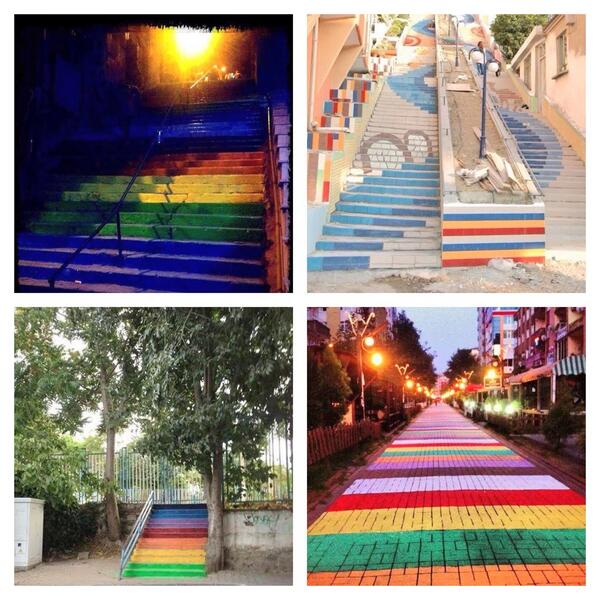
Image: cc licensed ( BY NC SA ) flickr photo shared by Daniela Hartmann

 judyoconnell.com