Bebo helps student bloggers!

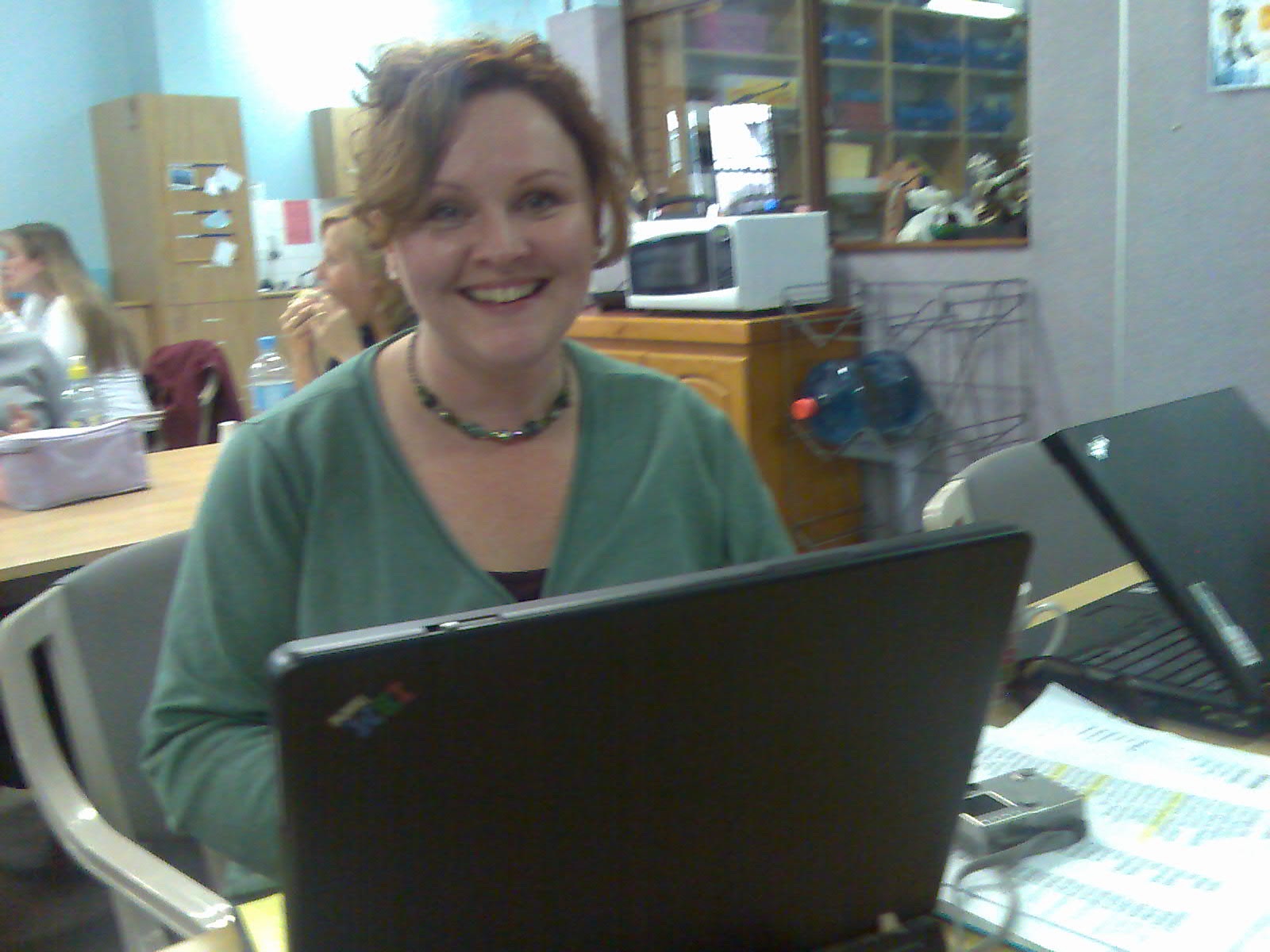
liz.jpgWorking with Elizabeth and Year 6 students at Good Shepherd Primary, I spent the day helping with the configuration of a Student Edublog for each of her students. We did this in small groups, and asked students to do their Procedural Writing as we went through the process. As a result of their writing, these Year 6 students will be able to ‘teach’ Year 6 students in another class how to do these same steps.

This is just the beginning of the adventure for these students – and later in the year we hope to see good critical reflection and ongoing engagement with personal learning. Elizabeth said “It was fantastic to see that every student could actively participate in this new learning project, and no-one was left behind”. Some of the girls were very excited. Some were quiet and concentrated hard on this new learning experience. The boys were somewhere in-between.

What was particularly interesting to us was the numbers of students who are already active users of Bebo! and who are able to bring their social networking experiences into this new learning environment.

These students have been approached to run a workshop with the Principal, AP, and the School Councillor, to teach them how to ‘get into blogging’! Fantastic work kids 🙂

Thanks very much Elizabeth for the opportunity to learn right alongside you and your students. What we are doing will help many others in our schools.

Virtual communities as a canvas of Educational Reform

Some recent online reads have prompted me to write about learning within our ‘shape-shifting’ technologically driven world. If you are new to blogs and online tools, let me tell you that there is a lot happening – but don’t let that put you off getting involved.

There are many different perspectives to put on online social networking and it is important to know where one is coming from when talking about social networking and youth. The perspective(s) one has will be very different whether one is a parent with a teenage daughter on MySpace, a marketing executive interested in the target group “14 to 20,” a journalist looking for the next big news story on young people and new media, a youngster using a social networking site as part of everyday life or a researcher investigating how young people are using social networking sites.

35Perspectives on Online Social Networking provides a different (broader) exposition of online networking. Here we have an excellent overview that helps me to see the matrix of inter-relationships between sectors or groups. That, after all, is what our real world is – and online virtual interactions are no different. Don’t let me forget that.

So that was what WOW2 was a bit about – educators in one countryexploring education ‘downunder’. I have to thank the WOW2 team for the fabulous opportunity to take part in the WOW2 EdTechTalk recently. It was pretty cool chatting to my aussie mates Graham Wegner and Jo McLeay. But I also ‘met’ Jason Hando, who (rather surprisingly) is in Sydney, doing great things as well. No excuses for us not keeping in touch are there?

Actually I think that what Sheryl wrote in Virtual Communities as a Canvas of Educational Reform is a ‘must read’ for school leadership teams working on capacity building and educational reform. She says:

The way I see it, social networking tools have the potential to bring enormous leverage to teachers at relatively little cost — intellectual leverage, social leverage, media leverage, and most important, political leverage. And while most of us reading this post can name educators across the globe that are using these tools as windows from their classrooms to share ideas and develop their own personal learning environments, the sad truth is that most aren’t. The burning question in most of our minds is how can we accelerate the adoption and full integration of 21st Century teaching and learning strategies in schools today?

Creating virtual communities that function effectively within and beyond our schools IS a significant challenge.

Our system of schools has been actively exploring these options in 2007 (fabulous!) – and we are definitely learning from the experience. We began the year by formally launching a blogging strategy. Unfortunately we didn’t address some of the important questions that Sheryll raised, and as a result our first effort at system-wide blogging ‘came a cropper’. Well, not totally, but it was no surprise really as some of the vital ingredients of social collaboration were missed starting with the first important point – who is blogging and why?

The best blogs are social – and we missed that point – and are platforms where discussion blooms. Blogs in this context of collaboration can’t be the stuff of soapbox but must be the stuff of open-ended conversation – and that means writing as well as commenting.

I like the fact that we continue to try to figure out what sort of virtual communities will work for us. We’re game for the challenge, and won’t let disappointment stop us from pursuing educational innovation and reform.

Now we have a new strategy to experiment with. The start of Term 3 saw the official launch of the ‘Learning Common’ blog – open to all teachers to write, comment, collaborate, and share the ups and downs of teaching life. We have merged a number of blogs into one, and opened up the option to be a writer to anyone in any school. Will this work?

Richard McManus covers some important things about blogging within the context of virtual communities asking Is Blogging Dead? Gosh, we are just starting with blogging, so I don’t think our teachers will be abandoning our new blog for something else. But, Richard says

It’s hard to get discussions going on a blog, but the blogs that at least attempt it and actually write for their readers — these blogs are the most compelling in my view.

I agree that this is at the heart of the matter. Let’s hope we can make the blog compelling reading – a place that people really want to be to share their ideas. So let’s see what happens. We’re pretty keen on blogging, and many of us blog!!!

We just haven’t cracked the whole virtual community thing yet, but I think we’ll get there.

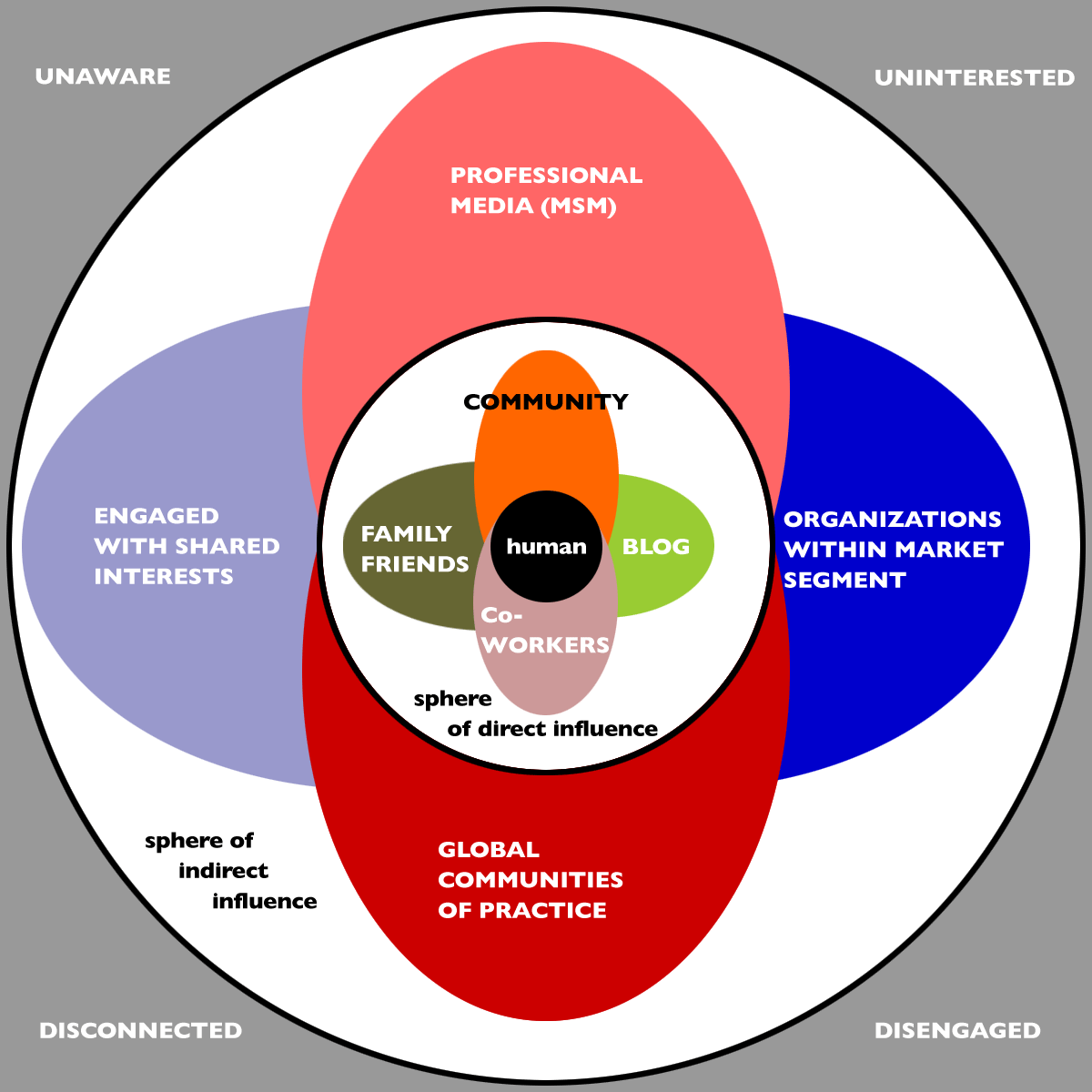
It’s all about spheres of influence. This graphic says a lot, and is easily adapted to provide us the guidelines for successful blogging – that builds capacity as part of our educational reform!

Sydney twitter meetup – be there!

twitter.jpg

For all you twitter fans or “would-be” twitterati! based in Sydney – you need to know that we have a
Sydney Twitter Meetup on Wednesday 25 July at 6.00 pm.

Pier 26 Bar
Pier 26, Aquarium Wharf, Wheat Rd, Darling Harbour
Sydney, New South Wales

More details at Upcoming.

Twitter has created quite a buzz for itself in the first quarter of this year- managing to combine the ease of Instant Messaging and SMS with the reach and scope of social networking services. So what’s all the buzz about?

Twitter: A beginners guide will give you all the information you need, and fill you in on this social networking phenomenon. I don’t think everyone is ready for Twitter – but I have found it a real boon for keeping in touch.

I don’t have a public profile – as I only really want to twitter with people involved with education. All up I have 65 friends – leading educators from around the world as well as in Australia – more than I could hope to keep in touch with using ‘traditional’ methods of communication like email!

“heyjudeonline” (me) is not online all the time – but when I link in I can quickly catch up. I also have the option of sending messages directly to my ‘friends’. I like the zany personal touch that twittering allows. It might be a passing fad – but twittering is part of the evolving shape of online communication – so for now I tweet! I do this online at twitter, or within FaceBook.  There is a Sydney Twitter Meetup in Facebook!  I’ll have to get myself invited 🙂

I don’t use my mobile to tweet – but I will certainly turn it on for the Sydney twitter meetup!

Why don’t you come and join me?

Australia’s Library Newspaper Archive Project Begins

The National Library of Australia is ready to begin a major undertaking of newspaper digitization. Within the next five years, Australian newspapers printed before 1954 will be available online for free. According to NLA director-general Jan Fullerton, “Within this project, we are planning to digitise one newspaper from each of the capital cities and the territories from the beginning of their time until 1954 which is the copyright cut off.” [Reported in The Age]

[From iLibrarian ]

Graham’s Gatekeepers!

Really…..!!

If you aren’t reading Graham Wegner’s Teaching Generation Z blog – then let me temp you with this cartoon 🙂 posted as GateKeeper’s Inc. Graham’s reflections on learning and teaching are good value reading.

CTLA Conference Time!

It was a lovely autumn day today and a good day to enjoy before the winter doldrums set it. I was very happy to spend time again with my friends who teach in Christian Schools – an hour and a half talking about creativity and learning in a Web 2.0 World.

Welcome to Heyjude 🙂

As promised, here is the presentation – ready for your homework!

The Horizon Project – they’re at it again!

I want to thank Julie Lindsay, Vicki Davis and others involved in the Horizon Project for once again showing us the exciting benefits of a global e-learning experience. Aren’t these students just awesome?

Like the award-winning Flat Classroom Project (2006), this new project involves students, this time 60 students in five countries, working together to look into the future of education based upon the Horizon Project Report 2007 Edition by the New Media Consortium and Educause (pdf).

The key trends identified in the Horizon Report which will be explored by the students are:

This project (using Wikispaces, Delicious, Slideshare, Ning, Twitter, Meebo, YouTube and many other online tools) is a ‘trip to the future’ where students will envision, create, and discuss what this future will look like withothers around the world. Through their work on the wiki, the students will be researching and experiencing web 2.0 enabled learning in a global community.

Student work will be assessed against three criteria related to the objectives of the Horizon Project.

  • To understand, analyze and evaluate the trends highlighted in the Horizon Report 2007based on key ideas and areas of impact.
  • To create a project wiki page that details this investigation and synthesis of the material.
  • To use Web 2.0 tools to facilitate collaboration as well as creation.

The comprehensive rubric is worth reading. They also made use of ISTE technology standards NETS.S (revised) for ‘What students should know and be able to do to learn effectively and live productively in an increasingly digital world’.Explore the Horizon Project, the Teachers’s Page and the Students Page.

The students come from USA, Austria, Bangladesh, Australia and China.

I have been invited to join the group as a member of the Expert Review Panel, supporting and reviewing the section on Social Networking. I expect to learn a great deal from these wonderful educators!

Vicki Davis, from Camilla, Georgia, has a beaut introduction to The Horizon Project available at Ning.

Julie Lindsay, from Dhaka, Bangladesh, (who is an aussie) has put a nice introduction to the project on Youtube. Horizon Project Introduction.

Technorati Tags:

Have you joined your friends in Ning! yet?

Recently one of my school colleagues, Jan, wrote about Ning on our blog Bibliosphere News – alerting all of a new ‘MySpace-like’ environment that is being explored by educators. As our schools are particularly interested in emerging Web 2.0 tools, she encouraged us to…

Have a look at Steve Hargadon’s School 2.0 social network and see a social network in the making. He’s using Ning, a social network builder, and then look at Bill Drew’s very active Library 2.0 network (includes school libraries but not confined to education).

Certainly Library 2.0 has a great pool of members, (up to 850 the other day) and it will be interesting to see how this develops, and what it offers that is different to blogs and blogging. Like all social networking sites, Ning incorporates flexible ways of communicating and sharing information – easily! I can communicate with my friends, keep track of a number of Ning networks, and use it to create projects of my own.

It is worthwhile checking out Library2.0, Classroom2.0, School2.0 and SecondLife Librarians which is just starting up. There are others too, and (as usual) you can easily find networks of interest via the spiderweb of networks of your friends! (I must say I am not running a seperate blog in each of these – and one of the things I would like is the flexibility to link my blog from each of my networks if I wanted to?)

I really like the use of Ning by the StopCyberbullying network. A beautifully crafted use of Web 2.0 tools to collaborate on this important topic. Great use of Feed Digest to provide the body of content from all the resources that members of the Network have identified as valuable on this topic.

I have already planned to use Ning for a Learnscope project – which will provide the collaborative professional learning environment for teachers involved in VTE Information Technology at Year 11.

LearnScope focuses on work-based staff development. The beauty of LearnScope is that it enables participants to design what, where, when and how their learning will take place during the life of the project (6 months June – November). LearnScope moves beyond traditional expert-centred professional development models to focus on relevant, participant-driven opportunities.

The flexibility of Ning to allow each of the teachers to maintain a blog and share the their own reflections in this environment is a powerful option for this project. In addition, it is easy to share video and photo files, links and other files; embedd other Web 2.0 API such as bookmark tag clouds, clusty search cloud, Google calendar, or whatever; have good threaded discussion in the Forum; have quick comments with chatter……and more! This has got to be a great environment for expert-centred virtual, 21st century professional development.

But as the spruker says  ….  that’s not all!

The one thing I was missing was a wiki…not that it is hard to create and link to a wiki as they have done in Classroom2.0 linking to Classroom 2.0 Wiki.

So the email from BillDrew@Library20.ning (yes, you get an email account as well) was most welcome:

Coming in June, the network will have a wiki component added to it. It is currently in development by Ning programmers. I will add a feature on the main page to spotlight a service or a new tool such as javascripts. Please send me items and ideas for such a feature.

Catch yourself some good movies added to Ning via TeacherTube or FlipShare.

Building an Online Community

Sheep may Safely Graze

Go meet someone new in Ning! today!

The (local) secret is out!

While attending the professional seminar at the State Library of NSW, I was not only busy with my presentation and workshop – I was also there to receive an award for

innovative and collaborative teaching practices integrating information and communication technologies

The John Lee Memorial Award is sponsored by Charles Sturt University, and is presented annually by the Australian School Library Assocation (NSW) President and a representative of Charles Sturt University. It was fun to meet with Ashley Freeman from CSU (pictured) as I have been a member of his ‘marking team’ in the Master’s program in the last couple of years.

It was a special honour for me to receive this award, as I worked with John Lee (in whose memory this award is made) in my early years as an information professional, being inspired by him to “think big” and to be future focussed at all times.

John, I think your inspiration has paid off!