Its just an “Interactive Whiteboard”!

I've had some experience with interactive whiteboards both in the classroom and for professional development. I know that there are plenty of teachers who are taking this technology 'on board' (excuse the pun) and finding very good uses when working with students. Many more teachers are still hankering for a 'piece of the action'.

Nice – but not enough. I have had reservations about the whole 'enthusiasm' thing. It is great to have good technologies to work with. I know the benefits. But lets keep the whiteboards in perspective. It is critical that we do not take Whiteboards as THE solution for providing engaging technology learning experiences for students. It's as if the Whiteboard is THE solution. Big sigh of relief – we are keeping up with new technologies!!

In my view it was just one bump on the rollercoaster ride of our teaching and learning journey. I don't want to dampen the enthusiasm, but I do want it kept in perspective.
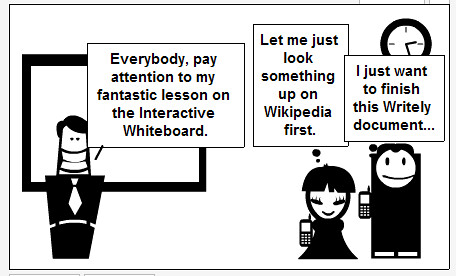
So it was great to read the post from New Zealander Leigh Blackall, where he picked up the long reflective piece from Australian educator Graham Wegner . As Leigh says, the graphic sums it up – for me too! But better still, read the whole of Graham's reflection here. Graham is responsible for IWB implementation at his school, but as he explains, he is not a blind advocate.

Social Internet = Web 2.0

At an inservice some weeks ago, a group of us shared ideas about changes in the digital envirnoment of our students that is impacting on their lives – and which must be understood by educators if we are to adapt our teaching to include more collaborative tools.

Our introduction to Web 2.0 was designed to alert our teachers to a different web world – well beyond the comfortable world of websites and smart searching of the internet. We provided this summary sheet of these ideas to encourage them to do a bit of looking. I admit, we could have created a Lense in Squidoo – maybe next time!

Web 2.0 is an 'hot topic' in the blogosphere – but is not yet a hot topic in your average school. Just today I came across yet another forum being promoted amongst our schools –Learning in an Online World.
Quite correctly the promo considers many changes that have occurred since 2000, and states that "Major challenges still exist. Continued collaboration and sharing and best practice is crucial to achieve our shared vision of all schools confidently using ICT in their everyday practices to improve learning and teaching."

This forum will certainly showcase some interesting things – because so many teachers and schools still have a lot to learn about the potential of Web 1.0 technologies. However, as far as I can see there is nothing Web 2.0 about the Forum. There is no obvious reflection on the digital world of our students, nor the use of Web 2.0 technologies for social networks, and supporting teaching and learning. Of course, these concepts may emerge within presentations.

Somehow I think that much is being missed in a forum which is discussing learning in an online world. While some very important things will be covered, there is just so much more to consider than learning management systems (MyInternet), electronic whiteboards, video editing, learning objects, Kahootz, ipods, wikki versus Britannica (ho hum! I wonder how up-to-date this presentation is?). The focus is very much on tools to use, rather than ways of thinking and operating in a socially networked world.

Computers everywhere – $US100

Moving right on from the topic of plagiarism, lets go right back to the basics of the changing landscape of learning – that is going very global! Media news has flagged the development of cheap computing for the third world. The implications of this are complex: students the world over will ultimately expect to use a computer to help them create, think, learn, design, communicate, respond, analyze, synthesize.

This is actually about chkids laptop.jpganging the social fabric of society and how we package and deliver learning. First using computers, then communicating in a digital environment as online access is eventually rolled out (when this would be we can't predict, but it must be a natural global development given time).

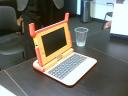
Here is a view of the laptop from the One Laptop Per Child program that you've been hearing about. The FAQ is here with answers from Nicholas Negroponte.

Stephen Abram:

" This nonprofit expects to ship 5-10 million laptops to the developing world in late 2006 and 2007.

This is the sort of thing that can change the world."