About Judy O'Connell

Educator, learner, blogger, librarian, technology girl, author and consultant. Transforming education and libraries. Innovation for life.

Computers everywhere – $US100

Moving right on from the topic of plagiarism, lets go right back to the basics of the changing landscape of learning – that is going very global! Media news has flagged the development of cheap computing for the third world. The implications of this are complex: students the world over will ultimately expect to use a computer to help them create, think, learn, design, communicate, respond, analyze, synthesize.

This is actually about chkids laptop.jpganging the social fabric of society and how we package and deliver learning. First using computers, then communicating in a digital environment as online access is eventually rolled out (when this would be we can't predict, but it must be a natural global development given time).

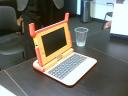
Here is a view of the laptop from the One Laptop Per Child program that you've been hearing about. The FAQ is here with answers from Nicholas Negroponte.

Stephen Abram:

" This nonprofit expects to ship 5-10 million laptops to the developing world in late 2006 and 2007.

This is the sort of thing that can change the world."

Working the Web – using or abusing?

I spent a good part of today attending a professional development session for Teacher Librarians. Amongst the things discussed was ethical use of resources and the issues around plagiarism.

In this context I am wonder where developments in Web 2.0 software will take us. Joe reports on Clipmarks. is a website which enables you to clip images and text onto a website to store and, optionally, share. Just like how you can take magazine and newspaper clippings, Clipmarks allows you to do this on websites.

Clipmarks requires you to install a extension or an toolbar. Say you are researching a specific topic and you have multiple sites open, each with a snippet of text or an image you want to take note of. With Clipmarks, you can simply open each source in a new tab in your browser, go into clip mode (first icon in toolbar), and clip multiple objects from each site. You will find all of your clippings still intact in each tab/site. Then, when saving your clippings, you will see that the Clipmark page will include all clippings grouped by source on one page. I have found this very useful, especially for when researching.

The idea behind Clipmarks isn’t just to store things – it’s to share them. is a bookmarking service designed for storing and sharing bookmarks. However, on del.icio.us you do not have the option to keep these bookmarks private. Clipmark is a bookmarking site with a twist.

Well yes! As Joe says "When does Clipmarks become a copyright breach? Copying copyrighted images and text (in quantities larger than an excerpt) surely isn’t fair use."

Solution Watch offers this information:

"Say you are researching a specific topic and you have multiple sites open, each with a snippet of text or an image you want to take note of. With Clipmarks, you can simply open each source in a new tab in your browser, go into clip mode (first icon in toolbar), and clip multiple objects from each site. You will find all of your clippings still intact in each tab/site. Then, when saving your clippings, you will see that the Clipmark page will include all clippings grouped by source on one page. This could be very useful, especially for when researching".

Read the full report from SolutionWatch here. Lets see what happens!

Sphere it! to read it!

Just recently I found myself in Borders Bookstore on a hunt for information about new developments in web technologies. Yes, there were exactly 18 bays of books – all sixfoot high each of them – and absolutely none about Web 2.0 technologies and developments, other than a few books on Ajax.

Never mind – everything anyone wants to know or discuss can be found in blogs, social bookmarks, squidoo – basically anywhere you want to go, or any place you want to aggregate!

I have to say that the report from TechCrunch about "Sphere It" was a damn good find.

The blog search engine – Sphere – is less than a month old…..and it is already a great tool for searching for blogs. Try school libraries, or Library 2.0, and you will hit a few jackpots.

But the other thing it offers is "Sphere It" functionality, which is already appearing embedded in articles. Theses links are prominently placed below the headlines of articles and link directly to Sphere blog search results related to the topic.

Here's the thing: "Sphere It" is a Sphere feature that allows users to find relevant blog content from any URL. The easiest way to use it is to install the Sphere It bookmarklet into the browser. Click it while on any web page and relevant Sphere blog search results will be brought up.

Unlike Technorati’s “Technorati This” feature, which shows blog entries that link to the URL being searched, Sphere It doesn’t report links. Rather, it does a semantic analysis on the text within the page being searched and returns blog results that it finds relevant to the article.

read the whole article at TechCrunch, of more on the difference between Sphere It and Technorati This, see Sphere CEO Tony Conrad’s blog post here

Chris Harris on “School Library 2.0”

I've been wondering how to launch into discussion on this topic – until I came across the ALA Library 2.0 podcasts. Based on the ALAblog and the Library 2.0 Project, participants develop a range of tools and resources around this topic.

So what is Library 2.0 all about? What do teacher librarians need to reconceptualise about learning and libraries in our increasingly rich digital world?

Chris Harris, in his final project podcast on school library 2.0 says "

" the library is the foundation. It is not a scheduled place. It is not a scheduled person. It is embedded throughout the learning process."

Chris urges us to seek out new opportunities, and find new innovative ways to provide services to the learning community. Listen to his podcast by clicking on the audio bar here.

Big Questions on Information Literacy

To follow up on my post about literacy, I am also inspired by Ewan's post on information literacy.

" What needs to change when our students can publish to a worldwide audience?

How does a teacher's role change when we can bring primary sources into the classroom?

How do we define literacy in a world where we must not only know how to read and write but to edit and create and publish?

Some answers.. Teachers need to be…

Content creators
Collaborators
Mentors to critical thinking
Change agents"

I would suggest that teachers also need to be…..

Mentors for developing a love of reading
Personal tutors encouraging a "PB" approach
Promotors of creativity

Big questions on literacy

A visit to several different schools today led me to conclude that literacy remains critical, central, and pivotal in the life experience of our students, regardless of the technology that they use either at school or in their social on-line world. We still need to find ways of promoting reading for pleasure, and metacogntivie involvment with what is happening in the book.

Teachers are always concerned about the literacy development of their students, but can seem to me to be remarkably unconcerned about the actual need to help foster an interest in reading. The problem is that teachers do not differentiate between literacy acquisition (as well as remediation) and literacy development. Students need to engage with a wide range of texts, not only for a purpose (learning) but also for fun!

I have seen great succes in promoting reading using a program called Accelerated Reader marketed by Renaissance Learning. It has a nice use of technology as a quizz tool. Yes I know that sometimes this program doesn't work at all!! But I am convinced that this is the result of poor implemetation, and poor engagement of the teachers in providing individual support for each student's emerging or developing literacy.

I was greatly heartened by one message, that appreared recently on the listserv for teacher librarians in Australia, about experiences with Accelerated Reader. For some the vote is still out on whether or not the program is worth including in the school curriculum.

" We have been using Accelerated Reader for the last 4 years and we absolutely love the program and the results we are seeing everyday! I have Junior School teachers who can see the benefits so clearly with their student's, they are now willingly giving up their RFF time each week to work with me on the program! I am definitely not a rep for AR, just an ordinary TL who gets soooo excited when I see kids reading! Throughout the use of the program we have seen the student's attitude to reading change – they now read the books they borrow, they now love reading, they plonk themselves all over the library to read. They reading in their lines, in their classrooms, they even read eating lunch and walking through the playground! They are excited about books!

We are a co-edschool and the boys in Year 3-6 are now reading as much as the girls. After years of trying to teach them how to use the catalogue they are now independent users because they need to locate their books on a regular basis. Teachers working with me on AR in the library find they are totally involved in their student's literature program, they receive regular, helpful and comprehensive reports on all students and are able to closely monitor their student's progress with me. Students love the freedom of choosing their own books and doing the quizzes but they definitely need to have read the book. In my experience they cannot score highly on their quiz by just watching the movie or reading the blurb! We have our AR books integrated throughout the collection and their student levels are zones of proximal development where maximum learning takes place with minimal frustration. We are trying to move right away from the reading scheme mentality. Over the past few years we have surveyed the students, parents and teachers and have shared ideas with each other on how we can improve its implementation. Every school is different and I agree with Judy, it may not work for everyone. I do believe however, the key to its success is the way it is implemented. We have found our students are more confident when reading and their vocabulary, comprehension and literacy skills have improved. Our students read widely now and across genres. AR inspires them to share their reading experiences with their classmates and read other booksthat are not on the program! Our more capable students have been extended and challenged and our slower ones encouraged through success.This …is the day-to-day nitty gritty classroom/library/student/teacher real evidence – for us the AR program WORKS!!!"

Blogs and Pedagogy

James Farmer’s two blog posts about how to and how not to use blogs in education summarize this paper. His thesis is that

"in order to effectively utilize blogs in an educational context, their inherent communication dynamics must be examined and pedagogical and environmental strategies and constructs used which reflect and utilize them effectively."

Read the rest of the ideas posted by Doug here. It is important to catch-up with the dialogue around blogs – just saves time in the thinking and application of this particular technology. Our own local experiences with blogs for teaching and learning can build on found knowledge.

eLive!

Direct from Scotland and a report of a keynote address by Alan November to150 educators – some thoughts that resonate here and now:

" After showing off the San Diego classroom where each student has his or her own desk and computer (i.e. their own office), he is now showing off the power of Google and how a search for "miserable failure" turns up the White House and George Bush. Students need taught how to use the internet, how to interpret information and analyse it, not how to use computers. We need to teach Information and Communications, not the Technology.This is nothing new for edubloggers, of course, who are able to tap into November-like thoughts every day of the year. But this room is full of around 150 educators, most of whom don't have a blog and so it's great to see the message getting through to a new wave of teachers."

As I write this post, Ewan McIntosh (who writes edublogs.com about learning in Scottish schools) is right there in the auditorium commenting, using his wifi connection. Up comes the message – stay online! I will, as I am keen to learn more about that conference!

Hello world!

Starting from nowhere! is how it feels to launch this blog.

However, the need to know, understand, and be part of the transformation that is the Web today seems to me to be almost dramatically urgent. What is worst is that here in Australia the dialogue, or passing conversation, has hardly begun.

Yes, there are some good OZ blogs sharing educator’s thoughts and experiences – I will add these as I go to help inform our develoments. But overall, out here on the Web, there are so many blogs, wikkis, lenses and many other places to find information, that it is easy to be challenged about what we are doing in education in the use of digital tools in the changing digital world.

So I will start at my own beginning, and hope that some will join me in the fantastic roller-coaster ride to a new Web world!

I really just want to urge all educators to do cool things! Time to chuck our preconceptions away! Time to undertake a journey of discovery. Time to influence the shape of things to come.